


Calcaneal bursitis is irritation or inflammation of a small fluid-filled bursa around the heel. Depending on which bursa is affected, pain may be felt at the back of the heel around the Achilles tendon or around the heel itself. Symptoms can include pain, tenderness, swelling and discomfort when walking, running or wearing shoes that place pressure on the painful area.
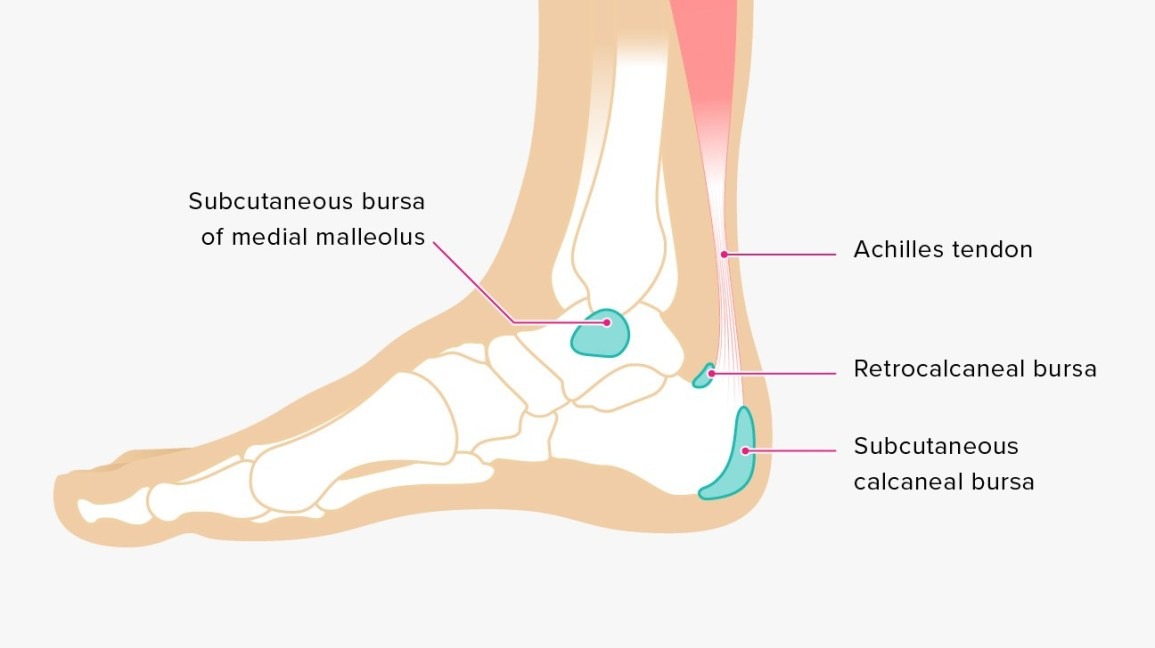
What Is A Bursa?
A bursa is a small fluid-filled sac found between tissues that move against each other.
Bursae can help reduce friction between structures such as tendons, skin and bone.
Around the heel there is more than one bursa, which is why the location of the symptoms matters.
Where Is The Calcaneal Bursa?
The calcaneus is your heel bone.
There are different bursae around this area.
The retrocalcaneal bursa sits between the Achilles tendon and the heel bone.
A superficial calcaneal bursa can occur closer to the skin at the back of the heel, where pressure or rubbing from footwear may contribute to irritation.
This distinction is important because pain underneath the heel, pain behind the heel and pain involving the Achilles tendon can have different causes.
What Does “Calcaneal Bursitis” Mean?
The terminology is relatively simple:
Calcaneal refers to the calcaneus, or heel bone.
Bursitis describes irritation or inflammation involving a bursa.
Therefore, calcaneal bursitis describes a problem involving one of the bursae around the heel.
The exact location matters because not every case of heel pain is bursitis.
What Can Cause Calcaneal Bursitis?
There is not always one single cause.
Symptoms may develop following:
- Repeated pressure or rubbing from footwear.
- A change or increase in walking, running or other activity.
- Repeated irritation around the back of the heel.
- A direct injury to the area.
Problems involving a heel bursa can also occur alongside other conditions around the back of the heel, including problems involving the Achilles tendon.
The important question is therefore not simply:
“What caused the inflammation?”
It is also:
“Which structure appears to be causing the pain and what is currently aggravating it?”
What Are The Symptoms Of Calcaneal Bursitis?
Symptoms depend partly on which area is affected.
They may include:
- Pain around the heel.
- Tenderness around the painful area.
- Swelling around the back of the heel.
- Redness or warmth.
- Pain when footwear presses against the area.
- Discomfort during walking or running.
- Pain when repeatedly loading the foot and ankle.
However, these symptoms are not unique to bursitis.
Other causes of heel pain can produce similar symptoms.
Is All Heel Pain Calcaneal Bursitis?
No.
Heel pain can come from several different structures.
Depending on the location and symptoms, possibilities can include:
- Plantar fasciitis.
- Achilles tendon problems.
- Heel fat-pad problems.
- Calcaneal bursitis.
- Bone-related injuries such as a calcaneal stress injury.
- Other foot and ankle problems.
This is why it can be difficult to diagnose the cause of persistent heel pain from symptoms alone.
Is Calcaneal Bursitis The Same As Plantar Fasciitis?
No.
Both can cause heel pain, but they involve different structures.
Plantar fasciitis involves the plantar fascia underneath the foot and commonly causes pain around the underside of the heel.
Calcaneal bursitis involves a bursa around the heel.
The location of the pain, how the symptoms behave and what we find during an assessment can help distinguish between different causes.
What Can I Do If I Think I Have Calcaneal Bursitis?
If your symptoms are relatively mild and there has not been a significant injury, simple changes may help settle an irritated heel.
These can include:
- Temporarily reducing activities that significantly aggravate the pain.
- Avoiding footwear that rubs or presses directly against the painful area.
- Choosing comfortable footwear appropriate for your activity.
- Gradually returning to walking, running or exercise as symptoms allow.
The goal is not necessarily complete rest until all pain disappears.
Instead, temporarily modify the things that are clearly aggravating the area and gradually rebuild activity as it becomes more comfortable.
Should I Use Ice?
Some people find ice useful for short-term pain relief.
If you choose to use it, wrap the ice or cold pack rather than applying it directly to the skin.
However, ice should not be presented as something that is required to heal the bursa.
The more important longer-term questions are what is aggravating the area and how you can gradually return to normal activity.
Do I Need To Change My Shoes?
Possibly.
Footwear is particularly relevant when a shoe is repeatedly rubbing or compressing the painful area.
If that is happening, temporarily changing to footwear that places less pressure on the heel may help.
This does not mean there is one particular type of shoe everybody with heel pain needs to buy.
The useful change depends on where the pain is and what is currently irritating it.
Do I Need To Stop Running?
Not necessarily.
If running significantly aggravates your symptoms, you may need to temporarily reduce:
- Running volume.
- Running frequency.
- Running intensity.
- Hills or faster running.
Some people may temporarily need to stop running if symptoms are highly irritable.
Others may be able to continue at a reduced level.
The aim is to find an appropriate starting point and then progressively rebuild what the heel can tolerate.
Does Heel Striking Cause Calcaneal Bursitis?
The existing article suggests that people who run with a hard heel strike are more likely to develop calcaneal bursitis.
We should not present this as an established rule.
Running-related heel pain is influenced by multiple factors, including training load, footwear, symptoms and the specific structure involved.
There is no need to tell every runner with heel pain that they must change their running technique.
If running is aggravating the problem, we should assess the individual rather than automatically trying to change their foot strike.
Do I Need A Scan?
Not usually.
Many causes of heel pain can initially be assessed from your symptoms and physical examination.
Imaging may sometimes be considered if:
- The diagnosis remains unclear.
- Symptoms are not improving as expected.
- A different injury is suspected.
- The result is likely to change management.
Ultrasound or MRI can sometimes identify changes involving a bursa, Achilles tendon or other structures, but imaging is not automatically necessary for every person with heel pain.
Can Physiotherapy Help With Calcaneal Bursitis?
Physiotherapy can help determine whether a bursa is likely to be contributing to your heel pain or whether another structure may better explain your symptoms.
Depending on what we find during your assessment, your plan may involve:
- Modifying aggravating activities temporarily.
- Reviewing footwear where relevant.
- Restoring movement where it is restricted.
- Building strength where appropriate.
- Gradually increasing walking or running.
- Progressively returning to exercise or sport.
The exact plan depends on what is causing your symptoms and what you want to return to.
Exercise Rehabilitation In London →
What If My Heel Pain Is Not Improving?
If your progress is not matching expectations, we reassess.
This may involve:
- Reviewing how your symptoms have changed.
- Retesting relevant movement and strength.
- Reconsidering whether the original explanation still fits.
- Adjusting your rehabilitation or activity.
- Progressing your programme when appropriate.
- Considering imaging if it is likely to change management.
- Considering medical or specialist referral if the presentation warrants it.
We do not want to simply repeat the same treatment indefinitely.
If the clinical picture changes, the plan should change too.
When Should I Get Heel Pain Assessed?
Consider getting your heel assessed if:
- Your symptoms are not improving.
- Pain is affecting normal walking.
- You have significant or persistent swelling.
- You are struggling to return to running or sport.
- Symptoms started following a significant injury.
- You are unsure whether the pain is coming from the bursa, Achilles tendon, plantar fascia or another structure.
More urgent assessment may be appropriate following a significant injury if you experience sudden severe pain, hear a pop or snap, cannot walk normally or are concerned you may have sustained a fracture or Achilles tendon rupture.
Still Struggling With Heel Pain?
If your heel pain is not improving or is stopping you from walking, running or exercising comfortably, we can assess the problem and help you understand what to do next.
At Fit2Function, your first appointment lasts 60 minutes and gives us time to understand your symptoms, assess your foot and ankle, explain what we find and build a plan around what you want to return to.
Plantar Fasciitis Physiotherapy →
Book Your Initial Assessment →