
Shoulder Pain Physiotherapy In London
Understand your shoulder problem and build a clear plan to get moving again.
Shoulder pain can affect sleeping, working, reaching, lifting, gym training and sport.
Whether your symptoms started after an injury, developed gradually or keep returning when you increase activity, we can assess the problem and help you understand what to do next.


When Should I Consider Physiotherapy For My Shoulder Pain?
You may want to have your shoulder assessed if pain, stiffness or weakness is affecting everyday movement, sleep, work, exercise or sport.
- Reaching overhead has become painful or difficult
- Lifting or carrying aggravates the shoulder
- Shoulder pain is disturbing sleep
- Gym exercises such as pressing or pulling have become uncomfortable
- The shoulder feels weak during certain movements
- Movement has become noticeably restricted
- Symptoms started after a sporting or everyday injury
- Shoulder pain keeps returning when activity increases
- Previous treatment has not produced the progress they expected
- They are unsure what activity is safe to continue
You do not need to know exactly what is causing your shoulder pain before booking.
Your first appointment is designed to assess the problem, explain what we think is happening and help you understand what to do next.
Shoulder Problems We Commonly Assess
Shoulder pain can present in different ways.
We commonly assess people with:Pain or weakness associated with the muscles and tendons that help control and move the shoulder.
Progressive shoulder pain and stiffness with a significant reduction in movement.
Symptoms during pressing, pulling, overhead work or other upper-body exercises.
Pain during reaching, throwing, racket sports, swimming or other overhead movements.
Pain, weakness or restricted movement following a sporting injury, fall or other physical event.
Symptoms that have continued longer than expected or repeatedly return when activity increases.
What Happens at Your First Shoulder Pain Appointment?
Understand your shoulder pain
We talk through how the problem started, which movements aggravate it, how it is affecting sleep, work, training or everyday activity and what you have already tried.
Assess what matters
We assess the movement and strength relevant to your shoulder problem and the activities you want to return to. Depending on your symptoms, we may also look at movements such as reaching, lifting, pressing or pulling.
Explain what we find
We explain what we think is happening and what the assessment tells us. If anything remains unclear, or we think a scan or another medical opinion would be useful, we explain that too.
Start Treatment or Rehabilitation
Where appropriate, we can begin treatment or rehabilitation during the same appointment. What we do is based on what we find during your assessment rather than using the same approach for everybody with shoulder pain.
Build Your Plan
Before you leave, we explain what we recommend next, what you can do between appointments and how we will measure progress towards the things you want to get back to doing.
Do I Need an MRI, Ultrasound or X-Ray for Shoulder Pain?
Not everyone with shoulder pain needs a scan before beginning appropriate treatment or rehabilitation.
Many shoulder problems can initially be assessed without an MRI, X-ray or ultrasound. Whether a scan would be useful depends on how the problem started, your symptoms, what we find during the assessment and whether the result is likely to change what we do next.
If you already have a scan or medical report, bring it with you and we can consider the findings alongside your symptoms and assessment.
If you have not had a scan, you do not normally need to arrange one before booking unless you have already been advised to do so.
If we think a scan or another medical opinion would be useful after assessing your shoulder, we will explain why and discuss the next step with you.
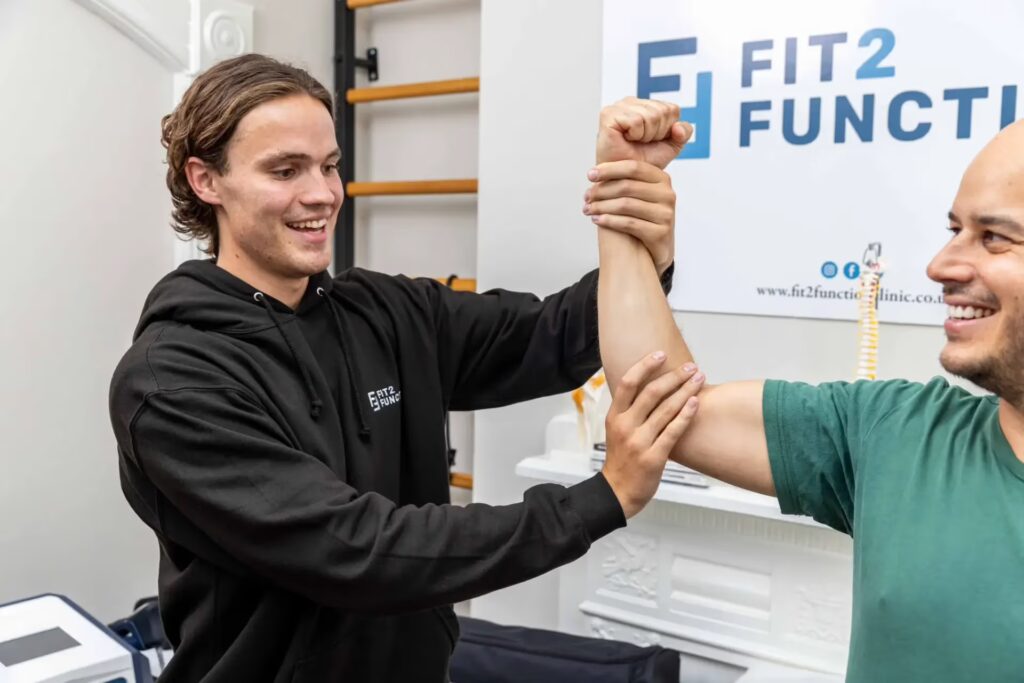
How Do We Treat and Rehabilitate Shoulder Pain?
There is no single treatment that everybody with shoulder pain needs.
What we recommend depends on your symptoms, what we find during your assessment and what you want to get back to doing.
Where appropriate, treatment can be used to help manage your symptoms and improve shoulder movement while we start working towards your longer-term goals.
If your shoulder has become stiff or restricted, we can work on gradually improving the movement you need for everyday activities, work, exercise or sport.
Exercise can be used to gradually rebuild shoulder strength based on your starting point and the movements you need to perform.
As your shoulder improves, we can make your rehabilitation more challenging so you are better prepared for lifting, carrying, pressing, pulling, overhead activity, gym training or sport.
Treatment options where appropriate
- Hands-on treatment
- Exercise rehabilitation
- Laser therapy
- Shockwave therapy
- EMS
- Infrared cupping
- Vibration therapy

Our Approach to Shoulder Pain
Understand your symptoms, assess shoulder movement, strength and function, and establish the most appropriate diagnosis or clinical explanation.
Where appropriate, address the immediate symptoms and limitations affecting you.
Progress movement, strength, control and physical capacity based on your individual presentation.
Build towards the work, training, sport or everyday activities you want to return to.
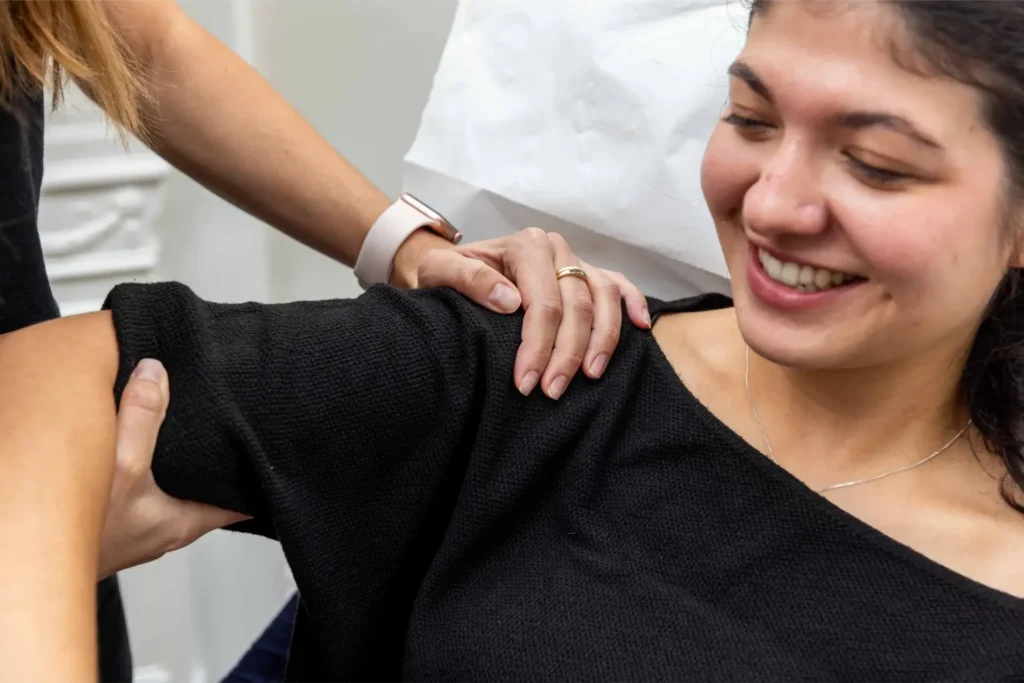
What If My Shoulder Pain Isn't Improving?
If your progress is not matching what we expected, we do not simply repeat the same treatment indefinitely.
We reassess.- Reviewing how your pain, movement and activity have changed
- Retesting relevant movement, strength and function
- Reconsidering whether the original working diagnosis still fits
- Adjusting treatment, rehabilitation or activity
- Progressing your programme when appropriate
- Considering imaging or referral if the clinical picture suggests it is needed

EXCELLENTTrustindex verifies that the original source of the review is Google. Very good laser treatment for lower back pain. Relieve a lot after the session.Posted on GoogleTrustindex verifies that the original source of the review is Google. Really impressed with George on my visit to F2F. Ankle has felt weak for a while now post sprain but already feeling better post treatmentPosted on GoogleTrustindex verifies that the original source of the review is Google. 5 stars is not enough for Anna! She is amazing.. not inky has she healed my shoulder she also healed my sons football injury! He is back playing in only a few weeks. ANNA also gave a plan which he can do along side his training to keep him fit! She is worth her weight in Gold!Posted on GoogleTrustindex verifies that the original source of the review is Google. I’ve been working with George at Fit to Function on and off over the past year, and I can’t recommend him enough. I was dealing with stubborn bicep tendinitis that just wouldn’t go away, but George completely sorted me out. Super friendly, knowledgeable, and genuinely helpful. I also love the new location — clean, professional, and easy to get to. If you’re struggling with any tendon issues, I highly recommend trying shockwave therapy here. It made a huge difference for me!Posted on GoogleTrustindex verifies that the original source of the review is Google. I’ve had some neck pain for a while, same with my right toe and thumb joint from football injuries. George and Conor were very welcoming. George really helped me in understanding the cause and telling me the right treatment before administering it. Completely recommend!Posted on GoogleTrustindex verifies that the original source of the review is Google. OMG amazing clinic, solved my issues and can run again. Thank you for your professionalism and attentiveness and such a warm atmosphere.Posted on GoogleTrustindex verifies that the original source of the review is Google. I went to Fit2Function for my ankle and had Anna Jancsurák as my Physiotherapist. She was amazing and so thoughtful and kind and very helpful in my rehabilitation. She explained everything very thoroughly and is very knowledgeable and showed me very helpful excersicesPosted on GoogleTrustindex verifies that the original source of the review is Google. I am currently being treated by Anna at Fit2Function for recurring knee issues. Anna is a fantastic physiotherapist: knowledgeable, professional, thorough and exceptional at her job. After only 3/6 sessions, and keeping up with physio outside of official appointments (don't skip this step), my legs are stronger and my knees no longer ache throughout my long, active workdays. I cannot recommend Anna enough, and I am safe in the knowledge that, should I ever have any body-related issues, I will be in safe hands with her.
Shoulder Pain FAQs
How to relieve shoulder pain?
Applying heat or ice, gentle movement and avoiding aggravating positions can help in the short term. Long-term relief often requires Physiotherapy, manual therapy, posture correction and strengthening exercises.
How to sleep with shoulder pain?
Try sleeping on your back or your non painful side with a pillow supporting the affected arm. Avoid lying directly on the painful shoulder and use extra pillows for support if needed.
How long does shoulder pain last?
Mild pain may resolve within a few weeks, but more persistent or complex cases can take several months. Early treatment can speed up recovery and prevent long-term issues.
What exercises help with shoulder pain?
Gentle mobility work and isometric strengthening can help in the early stages. We provide a personalised rehab programme based on your specific condition and stage of recovery.
How does a Physiotherapist help with shoulder pain?
Physiotherapists identify the root cause of your pain and guide you through hands on treatment and exercise based rehab to restore function, reduce pain and prevent future re-injury.
Meet Our Multidisciplinary Team Behind Your Recovery
Our Physiotherapy treatments are provided by our fully qualified Physiotherapists and practitioners. They are experienced professionals skilled in evidence-based rehabilitation techniques, ensuring your treatment is safe, effective, and tailored to meet your individual goals.