
Ligament Sprain Treatment in London
Assessment and rehabilitation for ankle, knee and other ligament injuries.
Ligament injuries can cause pain, swelling, reduced movement and a feeling that the affected joint is unstable or difficult to trust.
Whether your injury happened during sport, exercise or everyday activity, we can assess the problem and help you understand what to do next.


When Should I Consider Physiotherapy For A Ligament Injury?
- Pain started after twisting or overstretching a joint
- Swelling developed following an injury
- The joint feels unstable or less secure than before
- Walking, running or changing direction has become difficult
- They are struggling to return to sport after an injury
- They have been diagnosed with a ligament sprain or tear
- Movement or strength has not returned as expected
- They are unsure when it is safe to increase activity
- The same joint has been repeatedly sprained
- Previous treatment has not produced the progress they expected
You do not need to know exactly which ligament has been injured before booking.
Your first appointment is designed to assess the injury, explain what we think has happened and help you understand what to do next.What Is A Ligament Sprain?
Ligaments are strong bands of tissue that connect bones and help support joints. A ligament sprain happens when a ligament is overstretched or injured.
Some sprains are relatively minor, while more significant injuries can involve greater ligament damage and changes in how stable or confident the joint feels.
The name or grade of the injury is only part of the picture. We also want to understand how the injury is affecting your movement, strength and ability to do the things you need to do.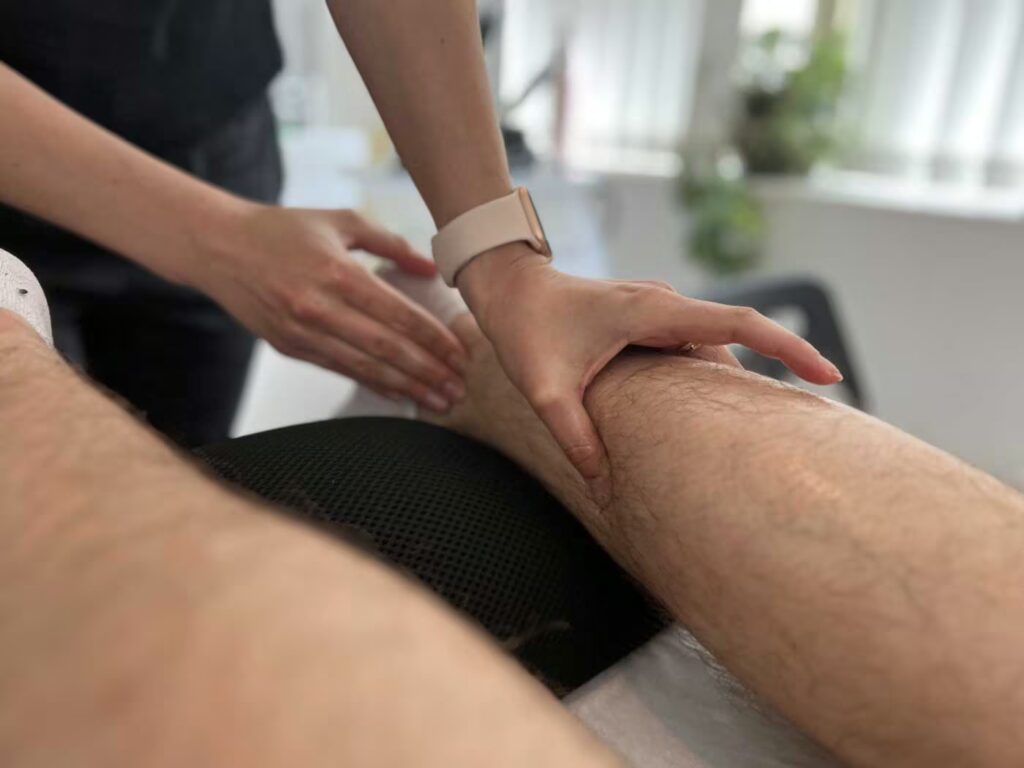
Ligament Injuries We Commonly Assess
Ligament injuries can occur around several different joints.
We commonly assess people following:Injuries following a rolled or twisted ankle, including people experiencing ongoing pain, swelling or repeated ankle sprains.
Knee injuries involving structures such as the ACL, MCL or other supporting ligaments.
Ligament injuries caused by twisting, landing, contact or changing direction during sport.
People who feel that a joint gives way, feels less secure or cannot yet be trusted during normal activity.
Repeated injuries to the same joint, particularly around the ankle.
People who already have a diagnosis or scan result and want a clear rehabilitation plan for returning to activity.
What Happens At Your First Ligament Injury Appointment?
Understand Your Injury
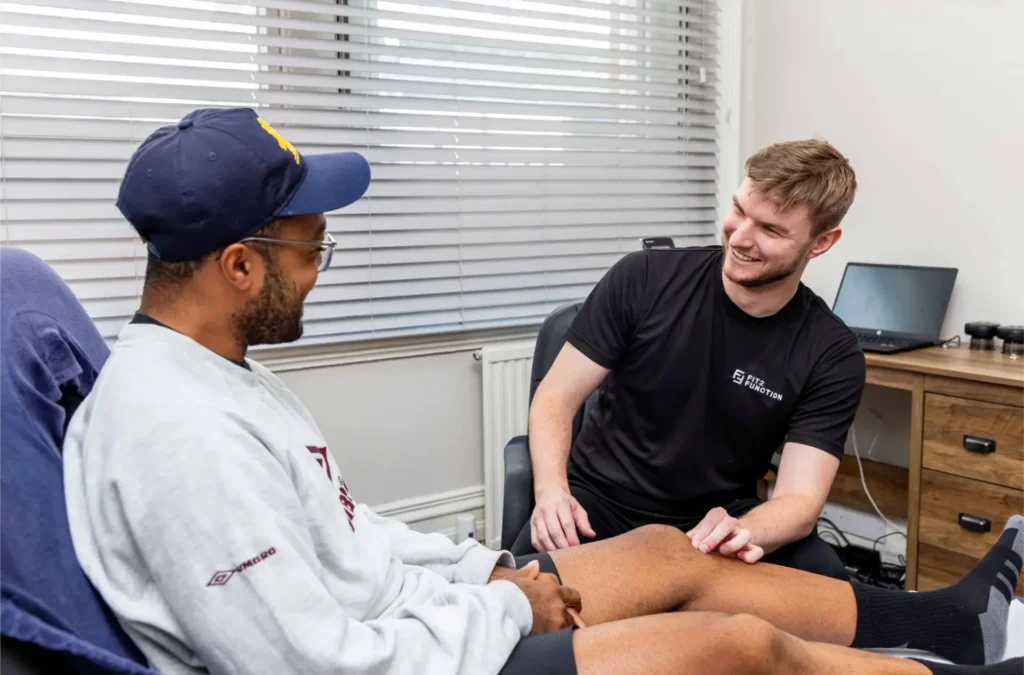
We talk through how the injury happened, what you felt at the time, whether swelling developed and what has happened since.
We also discuss how the injury is currently affecting walking, work, exercise or sport.
Assess The Joint
We assess the movement, strength and stability relevant to the injured area.
Depending on the injury and how comfortable you are, we may also assess movements such as walking, balancing, squatting or other activities related to your goals.
Explain What We Find
We explain what we think has been injured, how significant the problem appears to be and what that means for your next steps.
If anything remains unclear, or we think imaging or another medical opinion would be useful, we explain that too.
Start Treatment Or Rehabilitation
Where appropriate, we can begin treatment or rehabilitation during the same appointment.
The approach depends on the injury, how recently it happened and what the joint currently tolerates.
Build Your Plan
Before you leave, we explain what we recommend next, what you can do between appointments and how we will decide when you are ready to progress.
Do I Need A Scan For A Ligament Injury?
Not Necessarily.
Many ligament injuries can initially be assessed without an MRI or other scan. Whether imaging would be useful depends on how the injury happened, your symptoms, what we find during the assessment and whether the result is likely to change what happens next.
If you already have an MRI, X-ray, ultrasound or medical report, bring it with you and we can consider the findings alongside your assessment.
If you have not had a scan, you do not normally need to arrange one before booking unless you have already been advised to do so.
If we think imaging or another medical opinion would be useful, we will explain why and discuss the next step.How Do We Treat And Rehabilitate Ligament Injuries?
There is no single rehabilitation programme for every ligament injury.
What we recommend depends on the joint involved, the severity of the injury, your symptoms, what we find during your assessment and what you want to return to doing.Following a more recent injury, the first priority may be managing pain and swelling while maintaining appropriate movement and activity.
If the joint has become stiff or difficult to move, rehabilitation can progressively work towards restoring the movement you need.
Exercise rehabilitation is used to progressively rebuild strength around the affected joint and the rest of the limb.
For some ligament injuries, particularly ankle and knee injuries, rehabilitation may include balance, control and progressively more challenging movements.
As you improve, rehabilitation can become more demanding and reflect the activities you want to return to.

Treatment Options Where Appropriate
- Hands-on treatment
- Exercise rehabilitation
- Laser therapy
- Shockwave therapy
- EMS
- Infrared cupping
- Vibration therapy
How Do I Know When I Am Ready To Return To Sport?
Returning to sport should not be based only on how many weeks have passed since the injury.
We also want to know whether the joint has regained the movement, strength and confidence needed for the activity you are returning to.
Depending on your sport and injury, rehabilitation may progress through:- Strength exercises
- Balance and control
- Running
- Jumping and landing
- Accelerating and slowing down
- Changing direction
- Sport-specific movements
Not everybody needs every stage.
The aim is to progressively rebuild the demands that matter to your activity rather than simply waiting for the pain to disappear.
Our Approach To Ligament Injury Rehabilitation
We assess the injury and understand how it is affecting your movement, strength and activity.
Where appropriate, early treatment and rehabilitation can help manage symptoms and restore useful movement.
We progressively work on movement, strength, balance and the activities that are currently difficult.
As you improve, rehabilitation can progress towards running, jumping, changing direction, gym training or sport where appropriate.
Not everybody needs every stage or the same number of appointments.
Someone recovering from a mild ankle sprain has very different rehabilitation needs from someone returning to competitive sport after a significant knee ligament injury.
Your plan should reflect your injury and your goal.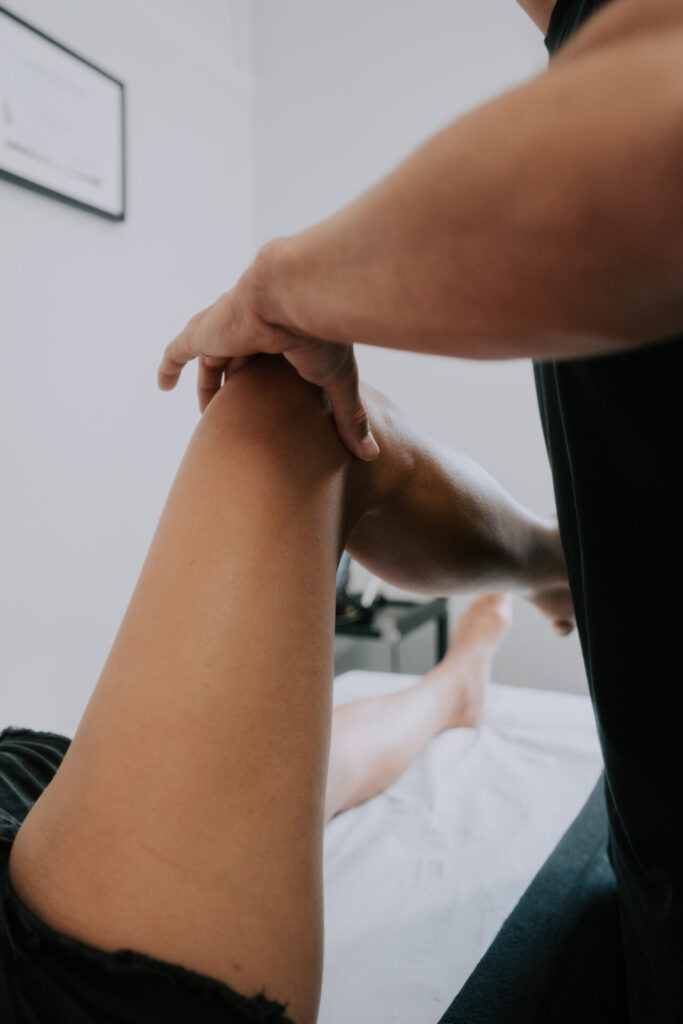
What If My Ligament Injury Isn't Improving?
If your progress is not matching expectations, we reassess.
That may involve:
- Reviewing how your pain, swelling or instability has changed
- Retesting relevant movement, strength and joint stability
- Reconsidering whether the original clinical explanation still fits
- Adjusting rehabilitation or activity
- Progressing your programme when appropriate
- Considering imaging if it is likely to change management
- Considering medical or specialist referral if the presentation warrants it
We do not want to simply repeat the same treatment indefinitely.
If the clinical picture changes, the plan should change too.
Why Choose Fit2Function For Ligament Injury Rehabilitation?
We have time to understand how the injury happened, assess the joint properly and explain what we find.
Where appropriate, treatment can be combined with progressive exercise and rehabilitation.
Our Covent Garden clinic allows rehabilitation to progress from early exercises into meaningful strength, balance, running, jumping and sport-specific work where required.
If your injury is not progressing as expected, we review the problem and adjust the plan rather than simply repeating the same treatment.
EXCELLENTTrustindex verifies that the original source of the review is Google. Very good laser treatment for lower back pain. Relieve a lot after the session.Posted on GoogleTrustindex verifies that the original source of the review is Google. Really impressed with George on my visit to F2F. Ankle has felt weak for a while now post sprain but already feeling better post treatmentPosted on GoogleTrustindex verifies that the original source of the review is Google. 5 stars is not enough for Anna! She is amazing.. not inky has she healed my shoulder she also healed my sons football injury! He is back playing in only a few weeks. ANNA also gave a plan which he can do along side his training to keep him fit! She is worth her weight in Gold!Posted on GoogleTrustindex verifies that the original source of the review is Google. I’ve been working with George at Fit to Function on and off over the past year, and I can’t recommend him enough. I was dealing with stubborn bicep tendinitis that just wouldn’t go away, but George completely sorted me out. Super friendly, knowledgeable, and genuinely helpful. I also love the new location — clean, professional, and easy to get to. If you’re struggling with any tendon issues, I highly recommend trying shockwave therapy here. It made a huge difference for me!Posted on GoogleTrustindex verifies that the original source of the review is Google. I’ve had some neck pain for a while, same with my right toe and thumb joint from football injuries. George and Conor were very welcoming. George really helped me in understanding the cause and telling me the right treatment before administering it. Completely recommend!Posted on GoogleTrustindex verifies that the original source of the review is Google. OMG amazing clinic, solved my issues and can run again. Thank you for your professionalism and attentiveness and such a warm atmosphere.Posted on GoogleTrustindex verifies that the original source of the review is Google. I went to Fit2Function for my ankle and had Anna Jancsurák as my Physiotherapist. She was amazing and so thoughtful and kind and very helpful in my rehabilitation. She explained everything very thoroughly and is very knowledgeable and showed me very helpful excersicesPosted on GoogleTrustindex verifies that the original source of the review is Google. I am currently being treated by Anna at Fit2Function for recurring knee issues. Anna is a fantastic physiotherapist: knowledgeable, professional, thorough and exceptional at her job. After only 3/6 sessions, and keeping up with physio outside of official appointments (don't skip this step), my legs are stronger and my knees no longer ache throughout my long, active workdays. I cannot recommend Anna enough, and I am safe in the knowledge that, should I ever have any body-related issues, I will be in safe hands with her.