
Sciatica Treatment & Physiotherapy in London
60-minute appointments to assess your back and leg symptoms and build a clear plan for what happens next.
Sciatica commonly involves pain travelling from the lower back or buttock into the leg and can sometimes include tingling, numbness or weakness.
Because similar symptoms can have different explanations, we start with an assessment rather than assuming every case of leg pain is sciatica.


When Should I Consider Physiotherapy for Sciatica?
You may want to have your symptoms assessed if pain or other symptoms are travelling from your back or buttock into your leg and affecting everyday life, work, sleep or exercise.
People commonly come to us when:- Leg pain is making sitting, walking or sleeping difficult.
- Symptoms travel from the back or buttock into the thigh, calf or foot.
- Tingling or numbness is present in the leg or foot.
- Back and leg symptoms keep returning.
- Symptoms are affecting work, exercise or sport.
- They have been told a disc problem may be involved.
- Symptoms have continued despite rest, exercises or previous treatment.
- They are unsure what activity is safe to continue.
You do not need to know whether your symptoms are definitely sciatica before booking.
We will complete a full assessment to understand your condition fully.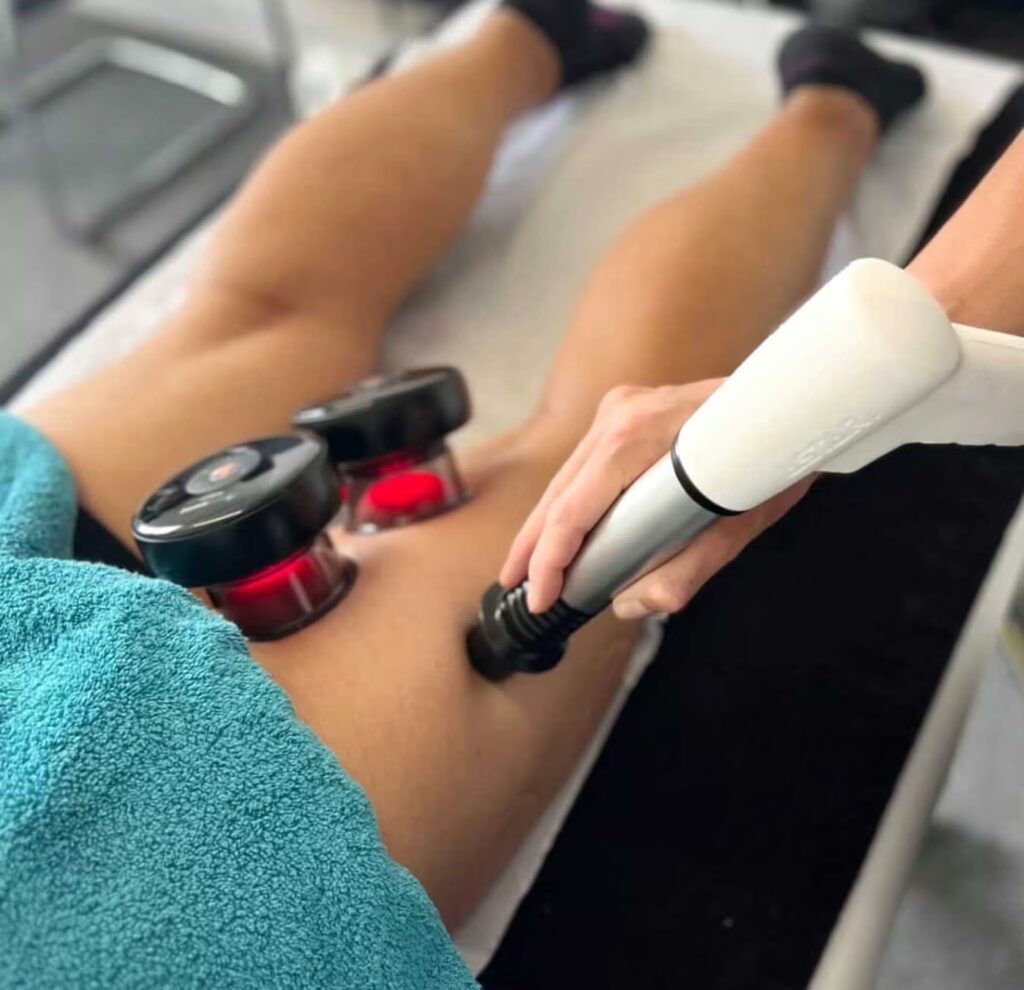
Sciatica Symptoms We Commonly Assess
Sciatica can present differently from one person to another.
We commonly assess people experiencing:Pain travelling from the lower back or buttock into the thigh, lower leg or foot.
Altered sensation travelling into part of the leg or foot.
Reduced or changed sensation that may occur when a spinal nerve is irritated.
Changes in strength or difficulty performing particular movements can sometimes accompany nerve-related symptoms.
Some people experience significant back pain alongside their leg symptoms, while others find the leg symptoms are more noticeable.
Certain positions or activities may increase or reduce symptoms depending on the individual presentation.
What Happens at Your First Sciatica Appointment?
Your first appointment lasts 60 minutes, giving us time to understand your symptoms, assess the relevant physical and neurological findings, explain what we find and begin treatment or rehabilitation where appropriate.
Understand Your Sciatica Symptoms
We talk through how the problem started, where your symptoms travel, what makes them better or worse, what you have tried previously and how the problem is affecting everyday life, work, exercise or sleep.
Assess What Matters
We assess the movement, strength and function relevant to your symptoms. Because sciatica can involve irritation of a spinal nerve, your appointment may also include appropriate neurological testing such as strength, sensation or reflexes where clinically relevant.
Explain What We Find
We explain whether the findings appear consistent with sciatica or another presentation and what we think may be contributing to your symptoms. If there is uncertainty, or we think further investigation or another medical opinion would be useful, we explain that too.
Start Treatment or Rehabilitation
Where appropriate, treatment or rehabilitation can begin during the same appointment. What we use depends on your symptoms, assessment findings and how irritable the problem currently is rather than following the same routine for everybody with sciatica.
Build Your Plan
Before you leave, we explain what we recommend next, what you can do between appointments and how we will monitor your symptoms and progress towards the activities you want to return to.
Do I Need an MRI for Sciatica?
Not everyone with sciatica needs an MRI before beginning appropriate conservative management.
Your symptoms and clinical assessment provide important information about what may be happening.
Current NICE guidance recommends that imaging is not routinely offered for low back pain with or without sciatica in a non-specialist setting. Imaging may be considered in specialist care when the result is likely to change how the condition is managed.
If your assessment suggests further investigation or specialist assessment may be appropriate, we will explain why.
If you already have an MRI or medical report, bring it with you and we can consider the findings alongside your symptoms and physical assessment.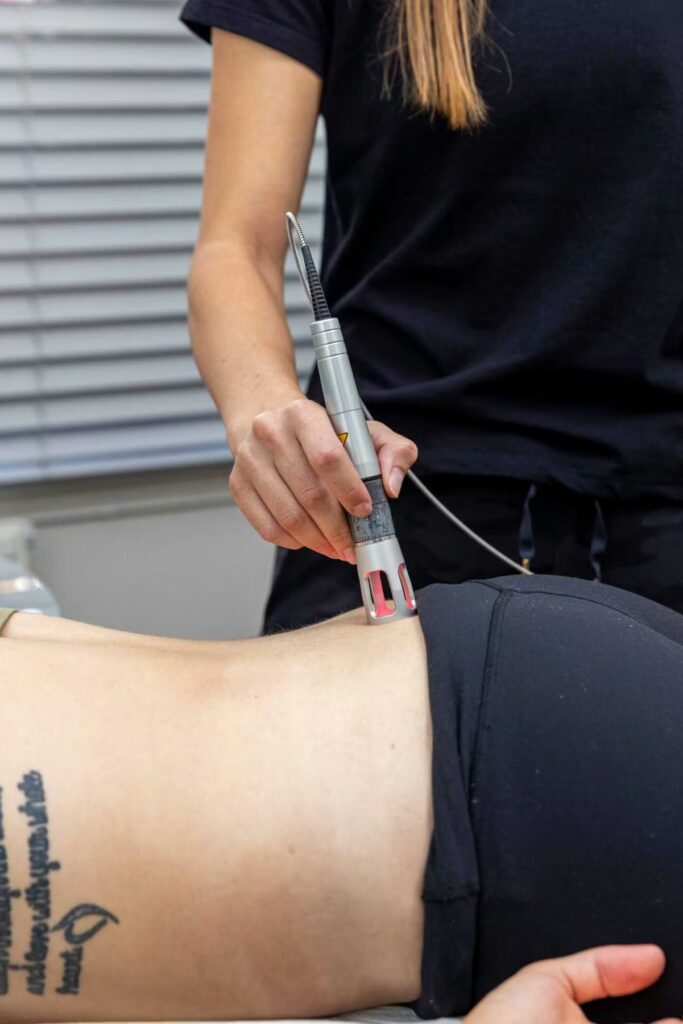
How Do We Treat and Rehabilitate Sciatica?
There is no single treatment that everybody with sciatica needs.
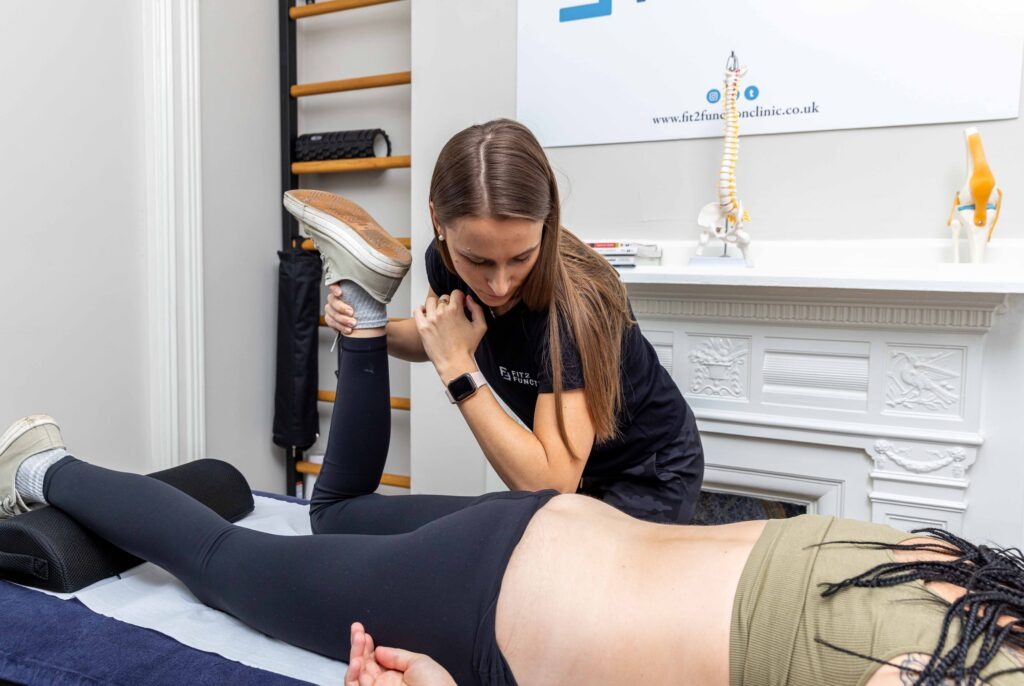
Your plan depends on your symptoms, neurological findings, physical assessment, current level of function and what you need to get back to doing.Early treatment may focus on helping you find ways to move and remain active without unnecessarily aggravating highly irritable symptoms.
Complete rest is not automatically required. We can help you understand what activity you can continue, what may need temporarily modifying and how movement can be gradually progressed as symptoms allow.
Exercise may be introduced or progressed according to your presentation, with the aim of rebuilding movement, strength and confidence rather than simply giving everybody with sciatica the same set of exercises.
As symptoms allow, rehabilitation can progress towards the strength and physical capacity needed for everyday life, work, gym training, running or sport.
Treatment Options Where Appropriate
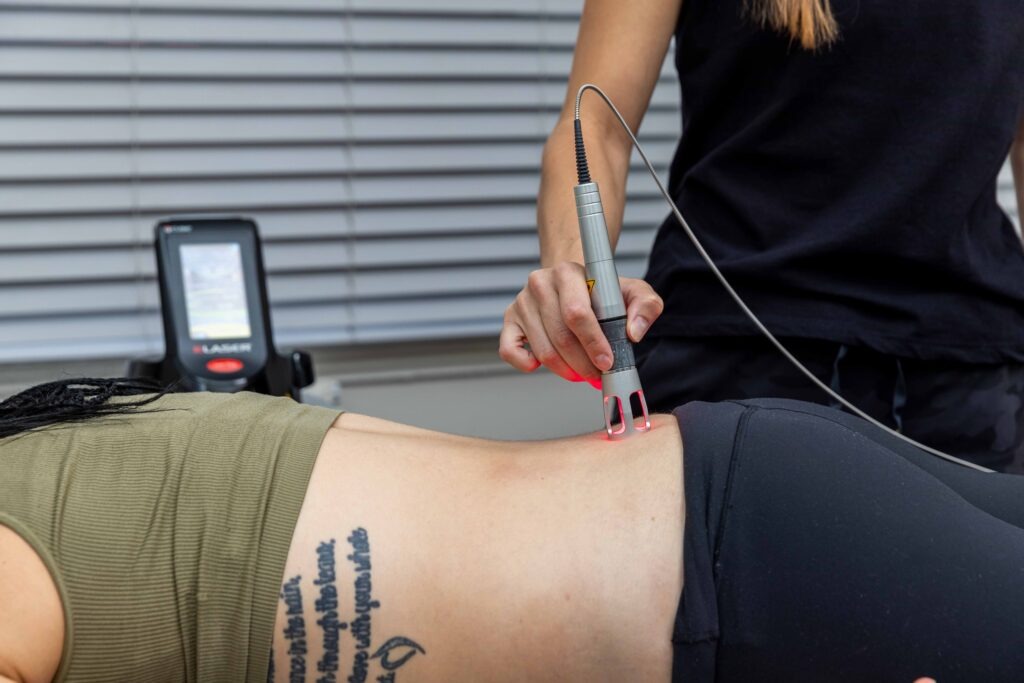
- Laser Therapy
- EMS
- Infrared Cupping
- Vibration Therapy
These are tools, not the starting point.
You do not need to decide which treatment you need before attending.
If a particular option has a useful role within your treatment plan, your practitioner will explain why.
Our Approach to Sciatica
Understand your symptoms, assess relevant nerve function and movement, and establish the most appropriate diagnosis or clinical explanation.
Where appropriate, help manage symptoms and the immediate limitations affecting you.
Progress movement, exercise and physical capacity according to your individual presentation.
Build towards the work, exercise, sport or everyday activity you want to return to.
What If My Sciatica Isn't Improving?
Sciatica can change over time.
If symptoms are not progressing as expected, we do not simply continue repeating the same treatment.
We reassess. That may involve:- Reviewing how your pain, sensation, strength and function have changed.
- Retesting relevant neurological and movement findings.
- Reconsidering whether the original clinical explanation still fits.
- Adjusting your treatment, rehabilitation or activity.
- Progressing exercise and normal activity where appropriate.
- Considering further investigation or referral when the clinical picture suggests it is needed.
For persistent sciatica that continues to significantly affect pain or function despite appropriate non-surgical management, specialist assessment may sometimes be appropriate.
The plan should respond to what happens over time rather than remaining fixed from your first appointment.
Why Choose Fit2Function for Sciatica?
We give you time to explain the problem and give your practitioner time to assess both your symptoms and relevant neurological findings where appropriate.
Care can progress from symptom management into movement, strength and physical capacity as your presentation allows.
Our Covent Garden clinic gives us access to a gym environment when rehabilitation needs to progress towards more meaningful strength and movement.
If your symptoms or neurological findings are not progressing as expected, we review the problem and plan rather than simply repeating the same treatment.
EXCELLENTTrustindex verifies that the original source of the review is Google. Very good laser treatment for lower back pain. Relieve a lot after the session.Posted on GoogleTrustindex verifies that the original source of the review is Google. Really impressed with George on my visit to F2F. Ankle has felt weak for a while now post sprain but already feeling better post treatmentPosted on GoogleTrustindex verifies that the original source of the review is Google. 5 stars is not enough for Anna! She is amazing.. not inky has she healed my shoulder she also healed my sons football injury! He is back playing in only a few weeks. ANNA also gave a plan which he can do along side his training to keep him fit! She is worth her weight in Gold!Posted on GoogleTrustindex verifies that the original source of the review is Google. I’ve been working with George at Fit to Function on and off over the past year, and I can’t recommend him enough. I was dealing with stubborn bicep tendinitis that just wouldn’t go away, but George completely sorted me out. Super friendly, knowledgeable, and genuinely helpful. I also love the new location — clean, professional, and easy to get to. If you’re struggling with any tendon issues, I highly recommend trying shockwave therapy here. It made a huge difference for me!Posted on GoogleTrustindex verifies that the original source of the review is Google. I’ve had some neck pain for a while, same with my right toe and thumb joint from football injuries. George and Conor were very welcoming. George really helped me in understanding the cause and telling me the right treatment before administering it. Completely recommend!Posted on GoogleTrustindex verifies that the original source of the review is Google. OMG amazing clinic, solved my issues and can run again. Thank you for your professionalism and attentiveness and such a warm atmosphere.Posted on GoogleTrustindex verifies that the original source of the review is Google. I went to Fit2Function for my ankle and had Anna Jancsurák as my Physiotherapist. She was amazing and so thoughtful and kind and very helpful in my rehabilitation. She explained everything very thoroughly and is very knowledgeable and showed me very helpful excersicesPosted on GoogleTrustindex verifies that the original source of the review is Google. I am currently being treated by Anna at Fit2Function for recurring knee issues. Anna is a fantastic physiotherapist: knowledgeable, professional, thorough and exceptional at her job. After only 3/6 sessions, and keeping up with physio outside of official appointments (don't skip this step), my legs are stronger and my knees no longer ache throughout my long, active workdays. I cannot recommend Anna enough, and I am safe in the knowledge that, should I ever have any body-related issues, I will be in safe hands with her.
Meet Our Multidisciplinary Team Behind Your Recovery
Our Physiotherapy treatments are provided by our fully qualified Physiotherapists and practitioners. They are experienced professionals skilled in evidence-based rehabilitation techniques, ensuring your treatment is safe, effective, and tailored to meet your individual goals.
Sciatica FAQs
How to relieve sciatica pain?
Gentle movement, applying heat and avoiding prolonged sitting can help in the short term. Physiotherapy techniques like manual therapy and targeted exercises provide longer term relief by addressing the root cause of your sciatica.
Can sciatica cause groin pain?
Typically, sciatica causes pain down the leg, but in some cases, related nerve or muscular issues may radiate discomfort toward the groin. A thorough initial assessment is needed to differentiate it from other conditions.
How long does sciatica last?
Mild cases may resolve in a few weeks, while more persistent sciatica can take 6-12 weeks or longer. Early treatment usually speeds up recovery and prevents chronic issues.
What is the best treatment for sciatica?
The best approach is a combination of hands on therapy, advanced treatments such as laser therapy, guided exercise rehabilitation and movement education. We tailor every treatment plan to your symptoms and goals.
How does a Physiotherapist help with sciatica?
Physiotherapists reduce nerve irritation through manual therapy, advanced treatments and guide you through exercises to restore strength and mobility, helping you recover faster and avoid future flare ups.