


The menisci are two crescent-shaped pieces of fibrocartilage that sit between the thigh bone and shin bone inside each knee. They help distribute load across the knee, absorb forces during movement and contribute to the stability of the joint. Meniscus injuries can happen suddenly during twisting or sporting movements, but changes to the meniscus can also develop gradually over time.
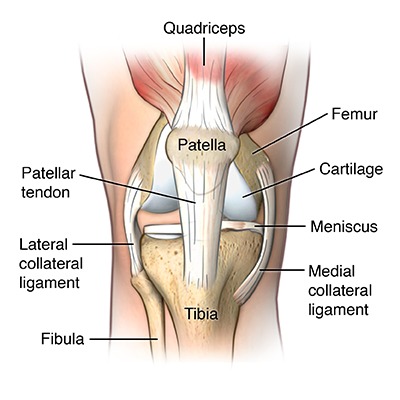
What Is The Meniscus?
There are two menisci in each knee:
- The medial meniscus sits on the inside of the knee.
- The lateral meniscus sits on the outside of the knee.
They sit between the femur, or thigh bone, and the tibia, or shin bone.
The menisci are sometimes described as the knee’s “shock absorbers”, but their role is broader than simply cushioning the joint.
They help distribute forces across the knee, improve the contact between the joint surfaces and contribute to knee stability.
What Does The Meniscus Do?
The menisci play several important roles when you walk, run, squat, jump or change direction.
These include:
- Distributing load across the knee joint.
- Helping absorb forces during movement.
- Contributing to knee stability.
- Improving how the joint surfaces interact as the knee moves.
This is why preserving as much healthy meniscal tissue as possible is important when a meniscus injury does require surgery.
How Does The Meniscus Become Injured?
Meniscus injuries do not all happen in the same way.
Traumatic Meniscus Tears
A traumatic tear can happen during a specific injury, particularly when the knee bends and rotates under load.
This can occur during sports involving turning or changing direction, but meniscus injuries can also happen alongside other knee injuries.
Degenerative Meniscus Tears
Meniscal changes can also develop gradually rather than following one obvious injury.
These become more common as we get older and may be found on an MRI even in people who do not have knee pain.
This is important because finding a meniscus tear on a scan does not automatically mean that the tear is responsible for all of your symptoms or that surgery is required.
Learn more about Meniscus Tear Physiotherapy
What Are The Symptoms Of A Meniscus Injury?
Symptoms vary depending on the injury and the individual.
They may include:
- Pain around the inside or outside of the knee.
- Swelling or stiffness.
- Difficulty fully bending or straightening the knee.
- Pain during twisting, squatting or other loaded movements.
- Clicking or catching.
- A feeling that the knee is giving way.
- The knee becoming genuinely locked or stuck.
Clicking does not automatically mean that you have a meniscus tear.
Many different knee problems can produce similar symptoms, which is why the overall history and assessment matter.
Important:
If your knee becomes genuinely locked and you physically cannot straighten it, particularly following an injury, arrange an appropriate clinical assessment rather than simply trying to exercise through it.
Learn more about Knee Pain Physiotherapy
Do I Need An MRI For A Meniscus Tear?
Not necessarily.
An MRI can provide useful information about the structures inside the knee, but a scan result should be considered alongside your symptoms and physical assessment.
Meniscal changes can sometimes be found on MRI without being the main reason somebody has knee pain.
If your symptoms and assessment suggest that imaging would change what happens next, MRI may be considered.
If you already have an MRI or scan report, take it with you when you are assessed.
Does A Meniscus Tear Always Need Surgery?
No.
A meniscus tear does not automatically mean you need surgery.
Many meniscal problems can initially be managed without an operation, using an appropriate combination of activity modification and progressive rehabilitation.
Rehabilitation may focus on:
- Restoring comfortable knee movement.
- Building strength around the knee.
- Gradually increasing what the knee can tolerate.
- Returning to walking, running, gym training or sport where appropriate.
Whether surgery should be considered depends on factors including the type and location of the tear, your symptoms, whether movement is mechanically restricted, your activity requirements and how the knee responds to non-operative management.
Some acute tears may require earlier orthopaedic assessment, particularly where a displaced tear is restricting knee movement.
Can Physiotherapy Help A Meniscus Tear?
Physiotherapy and rehabilitation can form an important part of managing many meniscus injuries.
The aim is not simply to “heal the tear” with an exercise.
Instead, rehabilitation can work on the things that may have been affected by the injury, such as knee movement, strength, confidence and the ability to tolerate everyday or sporting activity.
The programme should reflect your starting point and what you want to get back to doing.
Someone trying to walk and use stairs comfortably may need a different progression from someone returning to running, football or heavy gym training.
What Should I Do If I Think I Have A Meniscus Injury?
If you have knee pain and are unsure whether the meniscus is involved, you do not need to diagnose the problem yourself.
An assessment can look at:
- How the problem started.
- Where you feel the symptoms.
- Swelling and movement.
- Knee strength.
- Activities that reproduce your symptoms.
- Whether another knee problem could better explain what you are experiencing.
- Whether imaging or further medical assessment may be useful.
The aim is to understand what is happening before deciding what treatment or rehabilitation you need.
Still Struggling With Meniscus Or Knee Pain?
If knee pain, swelling, locking or difficulty returning to activity is continuing to cause problems, we can assess your knee and help you understand what to do next.
At Fit2Function, your first appointment lasts 60 minutes and includes assessment, an explanation of what we find and treatment or rehabilitation where appropriate.
Learn how we treat meniscus tears by clicking here.
Learn how we treat generic knee pain by clicking here.
Book your initial assesment by clicking here.
Related Articles:
- Patellofemoral Pain Syndrome (PFPS): Understanding Pain at the Front of your Knee
- What Is The Most Effective Treatment For Knee Arthritis?
- What is Patellar Tendonitis?